
Galvanization - FAQ's
What is galvanization and the benefits?
Hot-dip galvanizing provides a number of benefits to the metal it protects. The metallurgically-bonded zinc-iron alloy layers not only create a barrier between the steel and the environment, but also cathodically protect the iron. The protection offered by zinc means the galvanized coating sacrifices itself to protect the underlying base steel from corrosion or rust.
What is the galvanization process?
Hot-dip galvanizing (HDG) is the process of coating fabricated steel by immersing it in a bath of molten zinc. There are three fundamental steps in the hot-dip galvanizing process; surface preparation, galvanizing, and cooling.
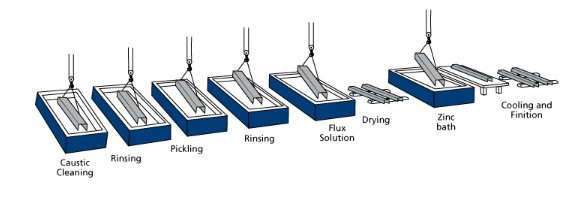
After surface preparation, the steel is dipped in the molten (830 F) bath of at least 98% zinc. The steel is lowered into the kettle at an angle that allows air to escape from tubular shapes or other pockets, and the zinc to flow into, over, and through the entire piece. While immersed in the kettle, the iron in the steel metallurgically reacts with the zinc to form a series of zinc-iron intermetallic layers and an outer layer of pure zinc.
Do I need my fixtures galvanized?
If you live in an area that has high humidity or close to marine and salt water environments, we strongly recommend you galvanize fixtures. For example, those who live near the beach, in the southern gulf states, or areas with extreme weather conditions. Our hot dip galvanizaiton is commercial grade and suitable for commmercial projects.
Does galvanizing alter the appearance of my fixture?
Because the fixture is submerged into zinc, small empty spaces in the metal may result in pronounced imperfections, and a textured surface, where there are seams in the fixture or where the curved laminates are welded together. We do our best to minimize these blemishes without damaging the protection of the galvanization, but after the fixture is painted, noticible textured areas may be apparent.
Galvanization vs. Powder Coating
Galvanization is an extra step to significantly increase the durability of wrought iron light fixture. In this process raw iron fixture is dipped in a vat of molten zinc. The zinc then chemically reacts with wrought iron and creates an alloy that neutralizes the oxides in the iron that cause oxidization. This creates a protective layer of metal on top of the wrought iron that significantly reduces the chances of oxidation and prevents rusting to occur and to spread. Because the zinc is molten it penetrates areas of metal overlay and seals any gaps between the metal that has been overlaid on top of another metal.
This is only imperfectly achieved by powder coating alone because the powder coat treatment sometimes cannot reach these overlays and fill the gaps as effectively as galvanization. For this reason, we recommend hot-dip galvanization for all high moisture and marine areas where metals are subject to year round rain and moisture.
What if I want my order galvanized?
When you place your order, please be sure to notify us at the time of order that you want your fixtures galvanized. We will provide you with the breakdown of the cost and lead time. Fixtures that are hot dip galvanized come with a 10 year warranty against rust, terms and conditions apply.
Fixture preparation and maintenance for outdoor lights
All our outdoor lighting fixtures are finished and treated for outdoor use through three to four steps depending on customer preference. Our standard treatment are as follows:
Standard treatment:
- Raw fixtures are sandblasted to remove any oxidation
- The fixture is then powder coated with a high quality zinc base primer
- The fixture is powder coated a second time with a durable polyester black powder coat
Galvanized treatment:
- The raw fixture is taken to a galvanization plant for hot-dip galvanization (see link)
- The fixture is then powder coated with a high quality zinc base primer
- The fixture is powder coated a second time with a durable polyester black powder coat
Maintaining the fixture over the lifetime
In case of hot dipped galvanized fixture little maintenance is required. Over he years UV will degrade the powder coat finish and make it a lighter tone. However, the fixture that has been treated and galvanized will rarely oxidize and will not show any significant signs of rusting. In the case of powder coating, rusting may appear after a period depending on the location and frequency of exposure to moisture. Bust this need not to be a problem If the fixture is maintained regularly at least once a year. This oxidation usually starts when there is a metal overlay or if a fixtures powder coat has been physically scratched. If the fixture is attended to in a timely manner there will be no permanent damage or rusting to the body of the fixture. Here are the steps to take to maintain your fixture.
- Inspect your fixtures on a regular basis usually twice a year.
- In the first signs of oxidation, wipe off the area with a damp cloth as much as possible. If it is caught early enough the oxidation should come off easily.
- From your local hardware store obtain an acrylic base outdoor flat black paint
- With a dry brush apply the paint to affected area until the rust is completely covered. If you have a patina finish you can contact our shop and we can direct you to the proper patina paint or send you some touch up paint.
Once again, if you catch the oxidization early enough and maintain your fixture regularly your fixture should last for many years without showing any deterioration.